
AMC Management Software: How Indian Service Businesses Track Contracts, Renewals and Preventive Visits
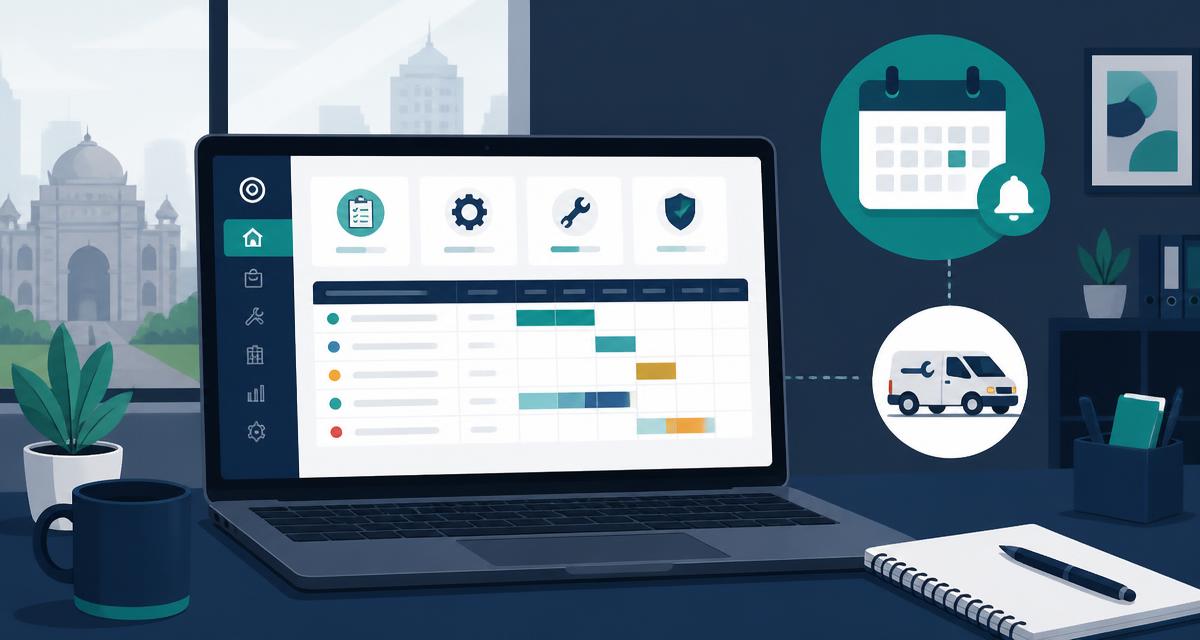
A practical guide to managing annual maintenance contracts in India — what to track, how to schedule preventive visits, why renewals slip, and how AMC management software fixes it.
Annual maintenance contracts are the most predictable revenue an Indian service business can own. A signed AMC means guaranteed visits, guaranteed billing and a customer who calls you first when something breaks. Yet most AMC books are still run on a spreadsheet, a WhatsApp group and someone's memory — which is exactly why renewals slip, preventive visits get skipped, and profitable contracts quietly turn into loss-making ones.
This guide explains what AMC management actually involves, where manual tracking breaks down, and what AMC management software should do for a service company running anywhere from 5 to 500 contracts.
What is AMC management?
An annual maintenance contract is an agreement to service equipment for a fixed period, usually twelve months, for a fixed fee. The customer pays upfront or in instalments. In exchange you commit to a defined number of preventive visits, a response time for breakdown calls, and often labour or parts coverage.
AMC management is the operational work behind that promise:
- Recording the contract terms, coverage, and the exact equipment covered
- Scheduling the preventive visits across the contract period
- Assigning technicians and tracking whether each visit actually happened
- Logging breakdown calls against the contract instead of billing them separately
- Tracking parts consumed and labour hours so you know contract profitability
- Raising renewal conversations before the contract expires
Miss any one of these and the contract still exists on paper — it just stops working as a business.
Where manual AMC tracking breaks down
Renewals are discovered too late
The single most expensive failure. A contract expires, nobody notices for six weeks, and by then the customer has already taken a quote from a competitor. Spreadsheets do not remind anyone. A renewal is only safe when someone is prompted 60, 30 and 7 days before expiry, and when that prompt lands with a named owner.
Preventive visits get skipped
Breakdown calls are loud; preventive visits are quiet. When the day gets busy, the scheduled quarterly service is the first thing to be dropped. Skipped visits cause more breakdowns later in the contract, which is precisely how a profitable AMC becomes unprofitable.
Nobody knows which contracts make money
If you cannot see the parts and hours consumed against each contract, you cannot tell the difference between a customer worth renewing at the same rate and one who needs a price revision. Most businesses discover this only when the year's numbers look wrong.
Coverage disputes
The customer says the part is covered. Your technician says it is not. Without the contract terms and the equipment list visible on the technician's phone at the site, this becomes an argument instead of a lookup.
Multi-site and multi-equipment contracts
One corporate customer may have eleven sites and forty units under a single AMC. A spreadsheet row cannot express that. You end up with parallel sheets that drift apart within a quarter.
What AMC management software should do
1. A contract record that holds everything
Customer, contract number, start and end date, contract value, billing schedule, covered equipment with serial numbers and locations, number of preventive visits promised, response-time commitment, and what is included versus chargeable. One record, visible to office and field.
2. Automatic preventive maintenance schedules
When a contract is created for four visits a year, the system should generate all four visits on the calendar immediately — not wait for someone to remember. Each visit becomes a real job with a date window, an assigned technician, and a checklist specific to that equipment type.
3. Renewal alerts with an owner
Automatic reminders at 60, 30 and 7 days before expiry, routed to a named person, with the contract value and last year's service history attached so the renewal conversation starts informed.
4. Breakdown calls linked to the contract
When a covered customer calls, the job should attach to their AMC automatically, inherit the coverage rules, and count against the response-time commitment. Uncovered work should be flagged for a quote instead of being absorbed silently.
5. Contract profitability
Total revenue against total labour hours, parts cost and travel for the contract period. This is the number that tells you which contracts to reprice at renewal.
6. Field access on a phone
The technician at the site needs the equipment list, service history, the checklist for this visit, coverage terms, and the ability to capture readings, photos and a customer signature. Offline capture matters — basements, plant rooms and industrial sites rarely have reliable signal.
7. Compliance-ready documentation
Service reports with signatures, timestamps and photos, generated per visit and retrievable per contract. When a corporate customer audits your compliance with the AMC, this is the evidence.
AMC billing in the Indian context
Two practical points that trip up growing service firms:
**GST on AMC.** AMCs are typically a supply of service, and the tax treatment depends on how the contract is structured — pure service, composite supply with parts, or separate supplies. Invoicing needs to follow the billing schedule in the contract, not the visit dates. Software should generate the instalment invoice on schedule, whether that is annual, half-yearly or quarterly.
Verify the current rate and classification for your specific contract type with your CA or on the official GST portal before you set up recurring invoices — the treatment varies by what the contract actually covers.
**Collections.** AMC revenue is only real when collected. Outstanding tracking per contract, with reminders, keeps renewals and receivables in the same conversation.
Choosing AMC software: a short checklist
- Can it hold multi-site, multi-equipment contracts under one agreement?
- Does it auto-generate preventive visits for the whole contract period?
- Are renewal reminders automatic, and do they have an owner?
- Do breakdown jobs link back to the contract and its coverage rules?
- Can technicians work offline and sync later?
- Does it show cost and profit per contract, not just per job?
- Does the pricing scale with your technician count without a large upfront commitment?
- Is support available in your working hours and in a language your team is comfortable with?
How to move your AMC book off spreadsheets
**Week 1 — Export what you have.** Pull every live contract into one sheet: customer, equipment, start date, end date, value, visits promised, visits completed. The gaps you find here are usually the first surprise.
**Week 2 — Load contracts and generate schedules.** Enter contracts into the system and let it build the preventive visit calendar. Start with contracts expiring furthest out so mistakes are cheap.
**Week 3 — Move the field team.** Put the app on technician phones and run every AMC visit through it. Keep paper as a backup for one cycle only; running both indefinitely guarantees neither is trusted.
**Week 4 — Turn on renewals and reporting.** Enable the 60/30/7-day reminders and start reviewing contract profitability monthly.
Most teams are fully switched within a month, and the first measurable win is almost always renewal rate.
The business case
For a firm running 100 AMCs at an average of ₹18,000 each, recovering even ten renewals that would otherwise have lapsed is ₹1.8 lakh of retained revenue in a year — before counting the breakdown calls avoided by actually completing preventive visits. That is the whole argument for structured AMC management: the contracts already exist, the software just stops them leaking.
Frequently asked questions
**Can small teams use AMC software?** Yes. A five-technician firm with forty contracts benefits more from automatic reminders than a large one, because there is no back office to catch what slips.
**Does it work for AC, elevator, fire safety, DG sets and IT equipment?** The pattern is the same across trades: covered equipment, scheduled visits, breakdown response, renewal. Only the checklists differ, so look for configurable checklists per equipment type.
**What about customers who want a service report every visit?** Reports should be generated automatically from the visit record — checklist, readings, photos, signature — and be shareable on WhatsApp or email the moment the technician closes the job.
**How do we handle contracts sold mid-year?** The schedule should be generated from the contract start date, not the calendar year. Any tool that assumes April-to-March will fight you.
FieldNexa handles AMC contracts, preventive schedules, renewal reminders, technician job cards and GST-ready invoicing in one place — built for Indian service businesses. Start a 30-day free trial and load your first ten contracts to see the renewal calendar fill itself in.