
How to Manage Field Technicians Efficiently
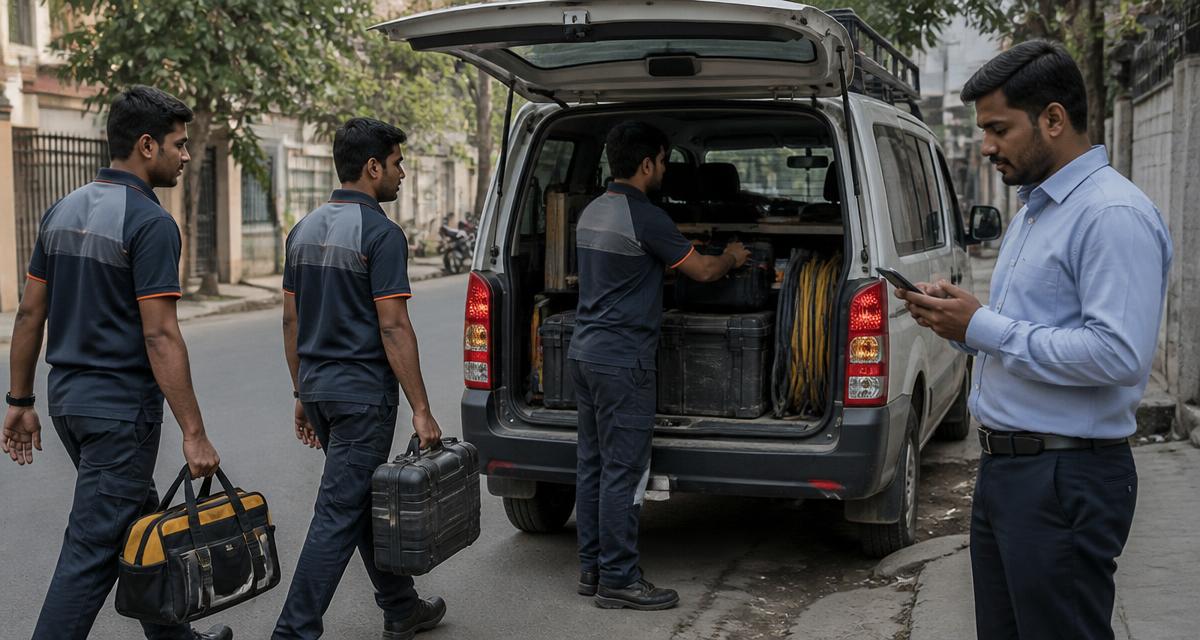
Daily planning, zone-based scheduling, job statuses, proof of work, GPS attendance and the five metrics that actually improve field technician productivity.
Managing field technicians is different from managing an office team. You cannot see the work happening, the plan changes several times a day, and the customer's experience depends entirely on one person standing at a site with a toolbag.
This guide covers the practices that consistently work for Indian field service businesses — CCTV, solar, electrical, HVAC, IT and equipment maintenance — and how to support them with simple systems rather than more phone calls.
Start with a clear daily plan
Most chaotic days start the night before, with no plan. Assign tomorrow's jobs today, and make the plan visible to each technician before they leave home. It removes the morning huddle at the office and often saves the first trip of the day.
A useful daily plan contains, for each job: customer and site, address with a map link, contact person, scope of work, expected duration and the material to carry.
That last point matters more than it sounds. A large share of repeat visits happen because a technician arrived without the right cable, connector or spare.
Group jobs by geography, not by order of arrival
Requests arrive randomly; routes should not be random. Cluster jobs by area so a technician does three jobs in one locality rather than crossing the city twice.
Two simple rules go a long way:
- Keep one technician in one zone for the day wherever possible
- Batch preventive maintenance visits in an area to fill gaps between urgent calls
Define job statuses and insist on them
Ambiguity about "done" is the most common source of disputes with customers. Use a small number of unambiguous statuses — assigned, travelling, on site, on hold, completed — and require the technician to update them from the site.
Keep "on hold" honest by requiring a reason: customer unavailable, material shortage, site not ready, needs escalation. Within a month those reasons will tell you where you actually lose time.
Make proof of work part of the job, not an argument
Every completed job should carry evidence: before and after photos, the reading or configuration where relevant, material consumed, and a customer confirmation by signature or OTP.
This protects the technician as often as it protects the business. When a customer reports a fault two weeks later, the photo record shows what was installed and how.
Handle attendance by location, not by register
For field teams, the useful attendance question is whether the technician reached the site and when. GPS-stamped check-in at the job location answers it, and removes the daily argument about start times.
Use it as an operational tool rather than a surveillance tool. Teams accept location-based attendance when it is tied to job records and travel allowance, and resist it when it looks like tracking for its own sake.
Measure a few things, consistently
Do not build a dashboard with thirty metrics. Track these five:
- Jobs completed per technician per week
- First-visit resolution rate, meaning jobs closed without a repeat visit
- Average time from request to completion
- Pending jobs older than seven days
- Preventive maintenance and AMC visits completed on schedule
First-visit resolution is the most revealing metric in field service. When it improves, travel cost falls, customer complaints fall and technician morale rises at the same time.
Invest in skills and standard procedures
A technician who can handle both installation and fault diagnosis is worth far more than two specialists in a small team. Build a short checklist for each common job type and keep it in the app, so a newer technician performs the job the same way as your best one.
Record which technician handles which equipment type well. Assignment quality improves immediately once that knowledge is written down instead of remembered.
Communicate with customers before they chase you
Most complaints about field service are about silence, not delay. A short message when the job is assigned, another when the technician starts travelling, and a completion note with the work summary prevents the majority of escalation calls.
Manage material like it belongs to a job
Issue material against a job, record consumption at the site, and return unused items to the store. Without this loop, stock levels drift and job costing is fiction.
For teams carrying van stock, do a monthly reconciliation of what was issued versus what was consumed or returned. The gap is a number worth watching.
Review the week, briefly
A 20-minute weekly review of pending jobs, on-hold reasons and repeat visits does more than a monthly meeting with a large deck. Fix the top recurring reason each week and the queue shrinks steadily.
Frequently asked questions
How many technicians can one supervisor manage?
With manual coordination, most supervisors in Indian service businesses manage six to eight technicians before quality drops. With scheduled assignment and mobile updates, the same supervisor can typically handle a larger team because they stop spending the day on status calls.
How do we reduce repeat visits?
Capture a proper scope at the time of the request, list the material required in the job, and require photos and a checklist at completion. Most repeat visits trace back to incomplete information at one of those three points.
Should technicians report attendance from the office or the site?
For field roles, site-based check-in is more meaningful and removes unnecessary travel to the office. Keep office reporting only for days that genuinely need it, such as stock collection or training.
What is the simplest first step for a team still using WhatsApp?
Assign tomorrow's jobs today to one named technician each, with the address and scope written down. Even before any software, that single habit reduces missed and duplicated visits.
Where to go next
For the wider context, read our complete guide to field service management software for Indian SMEs. If you are seeing missed visits and reconciliation problems already, the article on five signs your service business has outgrown WhatsApp and Excel covers what usually breaks first.
FieldNexa helps field-service businesses manage technicians, jobs, customers, attendance, inventory and expenses in one platform. Explore FieldNexa at https://fieldnexa.in or start a 30-day free trial.