
5 Signs Your Service Business Has Outgrown WhatsApp and Excel
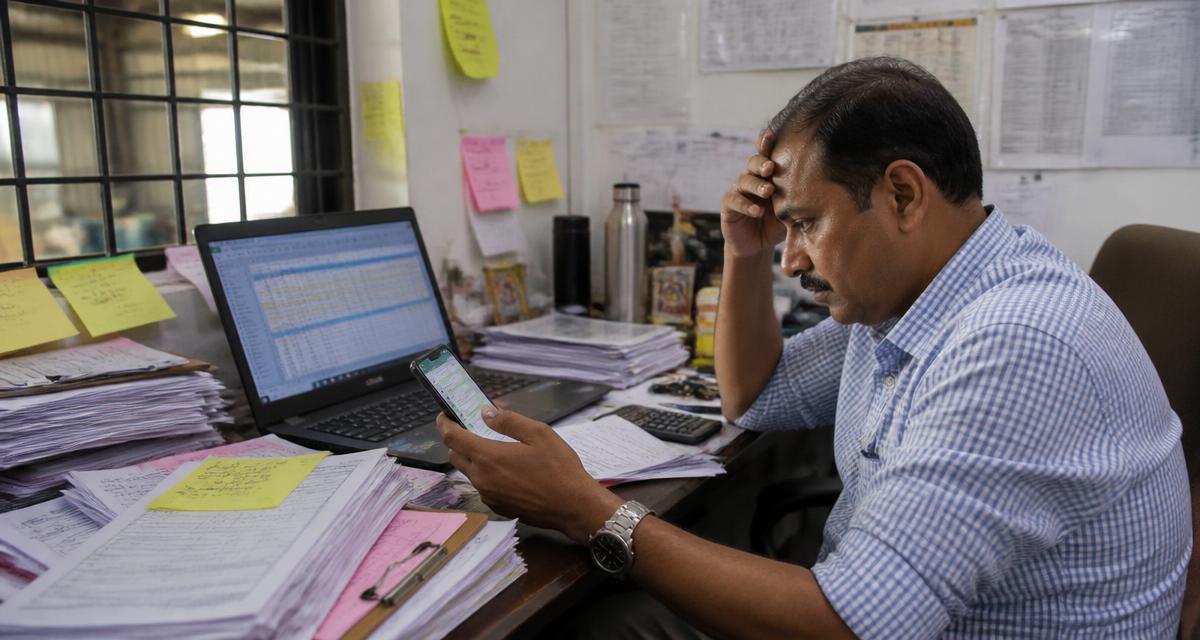
Missed AMC visits, status calls and material that never reconciles: five signals that your field service business needs a real system, and what to do about each.
Almost every field service business in India starts the same way: a WhatsApp group for the technicians, an Excel sheet for the jobs, and a phone that never stops ringing. It works — until it does not.
The problem is that the failure is gradual. Nothing breaks in one dramatic moment. Instead, a few service calls slip each month, AMC visits get missed, and material never quite reconciles. Below are five signs that your service business has outgrown WhatsApp and Excel, and what to do about each one.
Sign 1: You cannot answer "what is the status?" without making calls
A customer calls asking about a complaint raised yesterday. To answer, someone has to scroll a WhatsApp group, find the message, then call the technician to check whether it was actually finished.
If answering a status question takes more than a few seconds, your records are living in people's heads and chat history, not in a system.
What to do: give every request a job number and a status that changes as work progresses — created, assigned, in progress, completed. Status in one place is the single biggest operational upgrade a service business can make.
Sign 2: Jobs are assigned in chat, so nobody is truly accountable
In a group chat, a message sent to twelve people is a message assigned to nobody. Two technicians turn up at the same site, or none does.
Chat also has no memory that you can query. You cannot ask a WhatsApp group how many jobs each technician closed last month.
What to do: assign each job to one named technician with a date, time and scope. Keep the conversation in chat if you like, but the assignment must live somewhere it can be counted.
Sign 3: AMC visits and renewals are being missed
This is the most expensive symptom, and the most common. Annual maintenance contracts are recurring revenue that requires scheduled work — usually quarterly or half-yearly visits.
In a spreadsheet, those visits exist only if someone remembers to look. When the contract comes up for renewal and the customer counts three promised visits and one that actually happened, you lose the renewal and the reference.
What to do: generate preventive maintenance visits automatically from the contract start date, and track contract expiry with an alert 30 to 60 days ahead.
Sign 4: Material and inventory never reconcile
Cameras, DVRs, cables, connectors, panels and spares leave the store and are consumed at sites. In an Excel-based process, consumption is reported verbally at the end of the week — if at all.
The number you are missing is not "how much stock do I have". It is "what did this job actually cost me". Without material recorded against a job, your job-level profitability is a guess.
What to do: record material issued to a technician and consumed on a job, at the site, on a phone. Even partial discipline here changes pricing decisions.
Sign 5: Reporting takes a day, and you still do not trust it
If a monthly review means one person copying data from chat into a spreadsheet for a full day, you are paying for reporting twice: once in salary and once in the decisions you delay while waiting.
Worse, everyone in the room knows the numbers are approximate, so they argue with the report instead of acting on it.
What to do: capture data as work happens, not afterwards. A report built from job records is available on demand and does not need defending.
The pattern behind all five signs
Each symptom has the same root cause: work is coordinated in a channel that does not keep structured records. WhatsApp is excellent at conversation and terrible at accountability. Excel is excellent at calculation and terrible at real-time multi-user field updates.
You do not need to abandon either tool. You need one system where jobs, technicians, customers, sites, contracts, material and attendance are recorded as they happen — and then chat becomes what it should be: a way to talk, not a system of record.
What changes in the first month
Businesses that make this shift usually notice three things quickly.
- Status questions stop reaching the owner, because the office can answer from a screen.
- Pending jobs older than a few days become visible, and the oldest ones get closed.
- Technicians stop being blamed for things they did do, because the photo and timestamp are on the job.
The less obvious change is cultural. Once work is visible, supervisors plan the next day instead of reacting to the current one.
How to make the switch without chaos
- Move one process first: job assignment and completion.
- Load active customers and sites, not five years of history.
- Give technicians three tasks only — see my jobs, update status, upload photos.
- Run both systems for two weeks, then stop updating the spreadsheet deliberately.
- Pick one weekly report and actually review it, so the data stays trustworthy.
Frequently asked questions
Is WhatsApp really a problem for field service?
WhatsApp is not the problem; using it as your system of record is. Conversation belongs in chat. Assignments, statuses, proofs and history belong in a system that can be searched and counted.
Can we not just build a better Excel sheet?
You can, and many businesses do for a while. Excel breaks down when several people need to update the same data at once, from the field, with photos attached, and with an audit trail of who changed what.
How many technicians before this becomes urgent?
Most Indian service businesses feel the strain around five field staff, and find it unworkable beyond ten. The trigger is less about headcount than about how many jobs run in parallel across different sites.
Will technicians resist the change?
Less than owners expect, provided the mobile app is simple and does not add paperwork. Resistance is usually strongest where informal reporting hid a genuine performance problem.
Where to go next
If you want the full picture first, read our complete guide to field service management software for Indian SMEs. If your team is specifically in CCTV, we have covered the same shift for CCTV service businesses in more detail.
FieldNexa helps field-service businesses in India manage technicians, jobs, customers, attendance, inventory and expenses from one platform. Explore FieldNexa at https://fieldnexa.in or start a 30-day free trial.